- Flooring
Herringbone, Chevron & Wide Plank: Which Wood Flooring Pattern Fits Your Home
August 25, 2026
Choosing a wood floor is not only about color or species. The pattern you choose shapes how a room feels, how formal it looks, how easily it blends with your furniture, and how well it fits the pace of your home. For homeowners in Grand Rapids, Michigan, where homes range from classic older houses to newer builds and lake-area retreats, herringbone, chevron, and wide plank flooring each offer a different balance of character, practicality, and style.
Which wood flooring pattern fits your home best?
The best pattern is the one that supports the architecture of your home, the size of your rooms, and the way your household lives day to day. Herringbone flooring brings movement and timeless detail, chevron flooring creates a sharper and more polished statement, and wide plank flooring offers a relaxed, spacious look. If you are comparing wood flooring patterns, herringbone vs chevron vs wide plank comes down to whether you want classic texture, bold geometry, or broad natural warmth.
Grand Rapids homeowners should also think about local realities: snowy boots in winter, wet spring days, lake-effect humidity changes, pets, kids, and the mix of historic and modern interiors found across the area. A floor can be beautiful and still be the wrong fit if it makes your space feel too busy, too formal, or too difficult to maintain. The goal is to choose a pattern that looks intentional and works comfortably with your routine.
Herringbone flooring adds classic movement
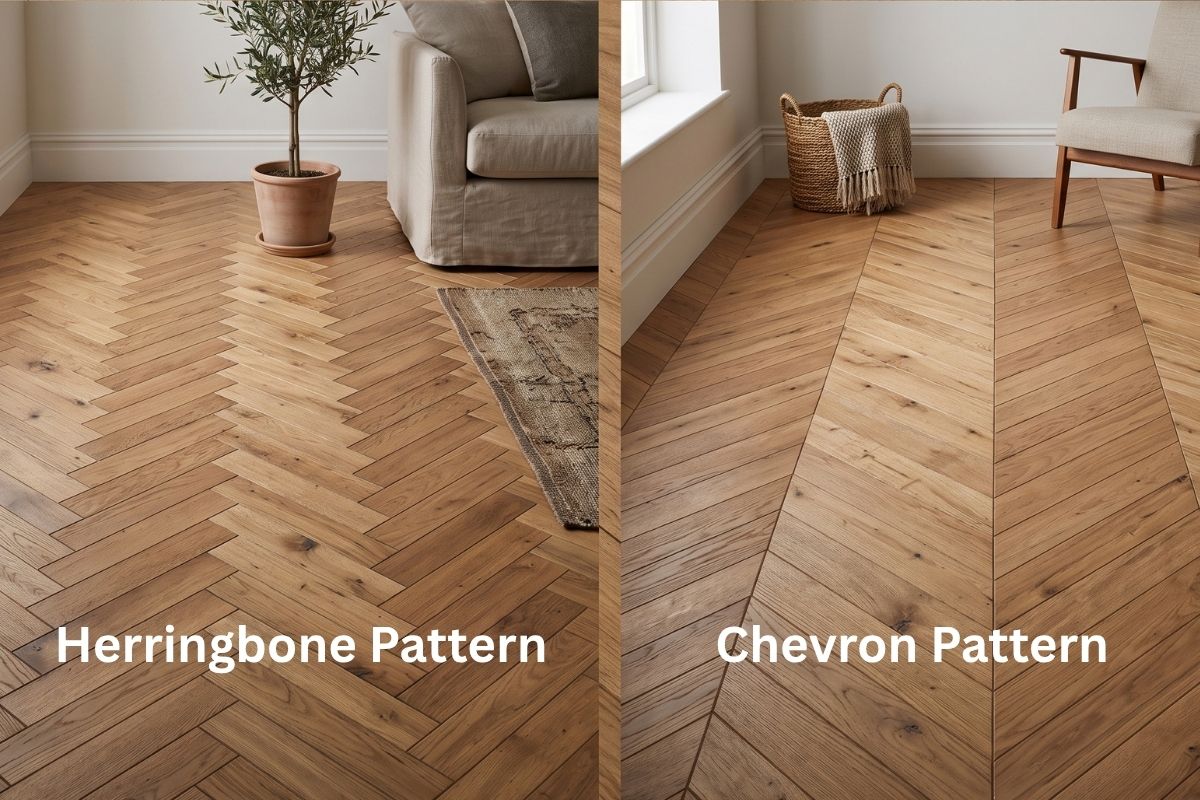
Herringbone is made with rectangular boards arranged in a broken zigzag pattern. The ends of the boards meet at staggered right angles, creating a woven look that feels detailed without being overly ornate. It has been used for centuries, but it still works in today’s homes because it brings rhythm and texture to a room.
For many homeowners, herringbone is appealing because it feels refined without looking cold. It can elevate an entryway, dining room, hallway, home office, or living room while still pairing well with casual furniture and warm finishes. In a Grand Rapids home with traditional trim, arched doorways, built-ins, or older architectural details, herringbone can feel especially natural.
It is also a helpful pattern when you want a floor to become part of the design rather than fade completely into the background. The repeated angles catch the eye, so even a simple wood tone can feel layered and custom. That said, herringbone does introduce visual activity. In a room already filled with patterned rugs, busy cabinetry, or bold furniture, it may need a calmer stain color or simpler decor to stay balanced.
Chevron flooring creates a cleaner statement
Chevron is often confused with herringbone, but the two are not the same. In herringbone vs chevron wood flooring, the key difference is the cut and alignment of the boards. Chevron boards are cut at angles so the ends meet in a continuous point, creating a crisp V-shaped pattern.
This gives chevron flooring a more streamlined and dramatic effect. The lines are cleaner, the direction is stronger, and the overall look can feel more modern or European-inspired. If herringbone feels textured and traditional, chevron often feels sleek and architectural.
Chevron can be a strong fit for open spaces where you want the floor to guide the eye. In a long living room, a foyer, or a kitchen that opens into a dining area, the pattern can create a sense of flow. It can also make a room feel more designed, especially when paired with simple cabinetry, minimal furnishings, or contemporary lighting.
The tradeoff is that chevron tends to be less forgiving visually. Because the points line up in continuous rows, precision matters. The pattern calls attention to symmetry, walls, and sightlines, so it is best used when you are comfortable making the floor a focal point. In smaller rooms, it can be stunning, but it may feel intense if the space already has several strong design elements.
Wide plank flooring brings warmth and openness
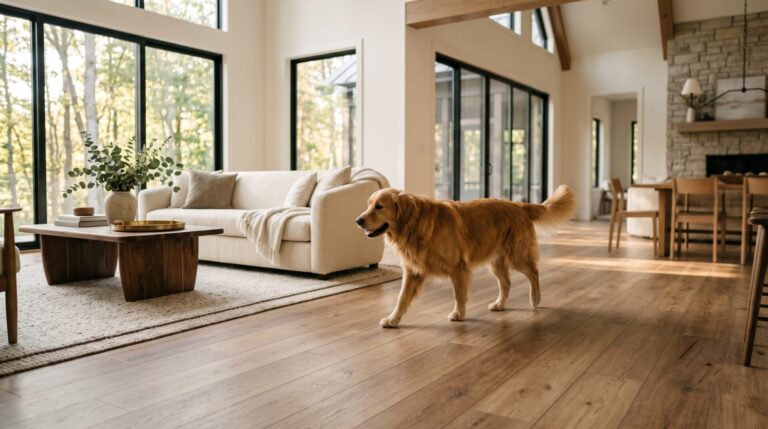
Wide plank flooring uses broader boards than standard strip flooring, allowing more of the wood grain, knots, and natural variation to show. Instead of creating movement through a repeated pattern, it creates impact through scale. The result is often warm, calm, and inviting.
This option is popular with homeowners who want a floor that feels substantial but not fussy. Wide planks can suit modern farmhouses, lakeside cottages, new construction homes, and renovated older houses. In the Grand Rapids area, where many homeowners want interiors that feel comfortable through long winters and bright enough during darker months, wide plank floors can help create a grounded, open feel.
Wide plank flooring is also versatile. A lighter finish can make a room feel airy and casual, while a medium or darker tone can feel rich and traditional. Because the layout is simpler than herringbone or chevron, wide plank often works well across larger connected spaces, including kitchens, living rooms, and hallways.
There are practical considerations, too. Wider boards naturally show more character, which can be a benefit in active households because small marks may blend into the grain. However, wood still responds to changes in moisture and temperature. In Michigan homes, where heating systems run heavily in winter and humidity rises in warmer months, proper acclimation, installation, and indoor humidity management are important for any wood floor, especially wider boards.
How each pattern changes the feel of a room
Pattern affects perception. The same wood color can feel formal, modern, rustic, or relaxed depending on the layout. Before choosing, look at the room from the doorway, from the main seating area, and from connected spaces. Floors are experienced in motion, not just in a sample board.
Consider these general effects:
- Herringbone: Adds texture, history, and a sense of craftsmanship. It works well when you want detail but not a perfectly sharp geometric look.
- Chevron: Creates strong direction and polish. It works well when you want a bold focal point and clean lines.
- Wide plank: Adds calm, natural warmth, and a sense of spaciousness. It works well when you want the wood itself to be the feature.
Room size matters, but it is not the only factor. A small powder room or entry can handle a detailed pattern if the rest of the design is restrained. A large open-concept room may benefit from wide planks because they keep the floor from looking too busy across a broad area. The right choice depends on how much attention you want the floor to command.
What should Grand Rapids homeowners consider before deciding?
Grand Rapids homeowners should consider climate, lifestyle, home style, and room function before settling on a pattern. Snow, salt, rain, and seasonal humidity changes can all influence how a floor performs and how much maintenance it needs. The most attractive option is the one that still feels practical when family, pets, guests, and Michigan weather are part of the picture.
Start with the entry points of your home. If your household regularly comes in through a mudroom or side door, you may have more freedom to use a decorative pattern in a foyer or living space. If the front entry sees heavy winter traffic, think carefully about finishes, rugs, and cleaning routines.
Then look at your home’s architecture. A traditional Grand Rapids home may welcome herringbone because the pattern complements classic millwork and established character. A newer build or renovated open-plan home may suit wide plank flooring because it supports clean sightlines and flexible furniture layouts. Chevron can be a beautiful bridge between the two, especially when you want a modern statement that still feels rooted in natural wood.
Finally, think about long-term taste. Herringbone and chevron are more distinctive, so they should be chosen because you genuinely enjoy patterned floors. Wide plank is often quieter visually, which can make it easier to adapt as furniture, paint colors, and trends change.
A practical checklist for choosing your pattern
Before you commit to a direction, walk through the decision in a practical way. Samples help, but they are most useful when viewed in your actual lighting and alongside your existing finishes.
Use this checklist to narrow your choice:
- Look at natural light. Rooms with limited light may benefit from lighter finishes or simpler layouts that keep the space open.
- Check your sightlines. Stand at the main entrances to the room and notice where the pattern would lead the eye.
- Match the home’s character. Classic architecture often pairs well with herringbone, while cleaner interiors may support chevron or wide plank.
- Consider daily traffic. Busy households may prefer finishes and layouts that disguise normal wear.
- Think about transitions. If the flooring will meet tile, carpet, stairs, or another wood floor, the pattern should transition cleanly.
- Balance the room. If cabinets, rugs, or furniture are already visually strong, a calmer floor may be the better choice.
- Plan for maintenance. Any wood floor needs care, but patterned floors can require more attention during installation and repair planning.
This step is especially useful if you are renovating in phases. A pattern that looks perfect in one room should still make sense when the next hallway, kitchen, or adjoining space is updated later.
Style pairings that work well
Each wood flooring pattern has a natural design language, but none of them is locked into one style. The finish, board width, wood tone, and surrounding materials all influence the final look.
Herringbone flooring pairs beautifully with traditional, transitional, and eclectic interiors. It looks balanced with painted trim, soft neutral walls, vintage-inspired furniture, or classic area rugs. If you want it to feel more current, choose a natural or muted finish rather than a highly glossy one.
Chevron flooring works well with modern, contemporary, and refined transitional spaces. It pairs nicely with simple cabinetry, black or brass accents, smooth stone surfaces, and clean-lined furniture. Because the pattern is already assertive, the surrounding design often looks best when it is edited and intentional.
Wide plank flooring is the most adaptable of the three. It can feel rustic with visible knots and texture, modern with a pale matte finish, or elegant with a richer tone and smoother grade. For homeowners in and around Grand Rapids who want a comfortable, lived-in home rather than a showpiece, wide plank can offer the right mix of beauty and ease.
The right floor is the one that supports your life
There is no single best answer in the choice between herringbone, chevron, and wide plank. Herringbone brings timeless movement, chevron offers crisp drama, and wide plank creates natural warmth and openness. The best decision is the one that fits your home’s architecture, your daily routine, and the feeling you want every time you walk through the door.
If you are updating a Grand Rapids home, take time to view samples in your own rooms, consider how Michigan seasons affect your household, and choose a pattern that feels good beyond the first impression. A well-chosen wood floor does more than cover a surface. It sets the tone for the way your home looks, lives, and welcomes people in.